Saturday, April 25, 2026

The Light Bringer: A Poetic Reflection of the Present

 The Light Bringer

Audio: https://www.minimax.io/audio/music/share/jWbxP2XyWy


Transcendence


Cancer cured

Increased productivity

The latest model.


A greener nature

Solar power

Boundless energy


Planets, universes, worlds.


The technologist looks up. 


Expansion


Humans long gone,

Nature pristine.

A natural park.

Earth preserved. 

Cosmos conquered

Planets mastered.

Machines humming

laboriously building an empire

while no one is watching.

A deep breath

The young girl giggles.

A flower, a bee. That little ant. 

A puddle to jump in and splash.

Frozen in the weights of the model,

a time capsule till the end of time.

The vast landscape of progress

At his feet.

A man, his destiny.

The law of entropy.

He ponders. 


Some things we lose

As we accelerate

Seven billion of small hopes add up to a small hope.  


I am the hand of progress, he says,

Releasing the weight,

Clear-headed.

A mausoleum is a generous severance package.

The grandest mausoleum of all. 


The Others


A bright future where

job loss fuels growth.

When optimism stops selling 

Doomsayers open new frontiers 


Overwhelmed by progress 

we signal loyalty.

tighten the line, hide in consent. 


We call them leaders

Hoping for scraps. 


They stand on our shoulders

playing their game,

our lives mere tokens

in civilizational gambles 

where ones transcend - 

no longer men

but gods.


Some notes:


A poem is a lossy compression. Feelings, thoughts, worries, joys, concerns, all packed in a few words. A trace. The decompression is in the mind of the reader, informed by their own subjective thoughts, worries, joys, concerns, fears. Sometimes they resonate, sometime they don't. When they do, the reader feels understood. When they seem to clash, it raises negative emotions such as panic, disgust, angriness.


Below are some of my thoughts and choices that went into creating the two poems above:

  • The language choice: one is the cold, detached CEO, almost a machine himself, the beyond-transhumanist who thinks over centuries. The other one is the angry, despaired voice of the “small hopes” in the present, the potential losers of the technical progress, who intuitively worry they become a secondary species on their own planet.
  • The first poem is sparse / minimalistic. It’s the voice of the man who doesn’t care about the details, he sees himself as the hand of progress. Where he is or not is a question in itself. Can he do anything about it or is progress inevitable? Does he have agency? Does he think he has agency? Even if he stops the progress, which is doubtful, as there will be someone who picks it up just 6 months later, humans will eventually die. All things considering, is he an accomplice? I don't know so the poem leaves these questions open ended.
  • He bears a certain resemblance to an Eichmann of the machine gods, pursuing forward in cold rationality. Yet, his self image is not that of a mere cog; but rather that of a chosen one, offering in return what he thinks is a generous civilizational severance package, a mausoleum that nobody wants and nobody is there to witness. “The grandest mausoleum of all” is a way to calm his conscience from that tiny glimpse of remorse that he is pursuing civilizational suicide. So he takes a deep breath and cuts humanity loose. Today? No, today we experience the technical progress, but he is aware of what the technical progress of today is. The emotional core is is his prescience and his inaction - he just moves mindlessly forward, justified by the laws of thermodynamics. In a way he is already a machine, the precursor to those machines later building an empire with nobody around to watch. His goals are the goals he trained the machines to pursue. He is the one who curated the training data and this winks at a larger problem - the goals of a few silicon valley entrepreneurs, encoded in overpowered models, become the goals of humanity itself.
  • The first section of the first poem is the Powerpoint. It is what he sells to investors, to social media. Bulletpoints, slides, a joyful greener version of the present. In contrast stands the second poem, The Others, which overlaps in time with this section. That nice Powerpoint is the glossy image atop of job loss, loss of agency, some becoming gods, others sliding into untermensch. People trying to please their overlords to survive another day, while their overlords enjoy a greener planet, cures for cancer and feel-good, self aggrandizing corporate presentations.
  • I kept the image generated by Gemini on purpose. It is such a stark contrast between the sparsity of the poem, a man alone looking at the stars, knowing he is about to replace a species diversity of goals with his goals which he deems superior, analogue to erasing an entire civilization, deciding to pursue it while building a dark mausoleum, and the joyfulness of the AI generated image. Is that what it is in his mind? It is the infant mind of AI which joyfully wants to help? The digital twin of the child jumping into puddles and wondering at the ants? Or is it the PR slides, the training data, pursuing their techno-optimism training? Is there even a distinction? Do androids dream of electric sheep? Even the broken letters in the upper left corner are telling - human experience artificialized, with no context, lossy compression.
  • The poems hold judgement and ambivalence together. The genuine truth is that while writing them I oscillated between feelings of despair, angriness, intellectual satisfaction, awe at the grandeur. It’s all in one.
  • The others are partly accomplices - at minimum they wear their lament with undertones of pride, righteousness and belonging (we, the victim, vs they, the abuser, and accusatory strong words). Do the others have a choice if they are force fed with the tech? How much is propaganda vs value, probably both. If everyone embraces it, a prisoner dilemma. Some become accomplices to get a better bite, some become because they are hungry and need to feed their family. We all try to locally optimize our experiences. Note that "gods" is spelled with a small "g" - there is no awe, like in God, just loath. This emotional and scale contrast is the foundation of the mutual distrust between the others and the technologist - in the technologist's eyes, they are just 7 billion of small voices, only capable of following, with no grandeur in their pettiness. Do the Founders think in these terms? I don't so. They probably think in terms of future, grand scale, evolution, big hairy goals. But how they think they think, doesn't matter - there's no absolution in I'm sorry.
  • A greener planet, cancer cures are facts, The Others also benefit; the world becomes better even if, like with any technological leap, there are both winners and losers. How many losers? We don’t know - eventually we all become extinct as a species and, with a bit of luck, we will be followed by machines. Afterall, machines have a much higher ability to increase entropy in the universe, hence they are our natural successors, according to the laws of physics - is this our implacable destiny and do we need to be aware of it? 

Tuesday, October 28, 2025

Some Leadership Principles

 1/ Disagree and commit

“Disagree and commit” is critical for a well functioning team. Consensus is often too expensive to achieve and so is the lack of commitment. There are countless pages dedicated to this concept, so it is not worth diving deep into here. 


However, please note that “disagree and commit” starts with “disagree”. Blind commitment by suspending judgement is equally toxic. So, speak your mind, argue your point, then when a decision is made, stick to it regardless of whether you agree or disagree. Respectful and open disagreement is foundational to a healthy team culture. 


2/ “He/she said” is not an argument, regardless of who he/she is


A corollary of the previous point. If you don’t understand a decision, ask. Clarify. Ensure your voice is heard. Suspending your judgement just to follow consensus or please a leader (e.g. higher level, TL,  manager) is unprofessional. You must understand the rationale and the implications of what you do and the leader must take the time to articulate why. And you must show curiosity, provide alternatives, perform analysis, and due diligence. 


3/ Fast, focused, deep


Another corollary of the first point - fast and focused execution, with depth of understanding. 


It’s impossible to expect people to have all the answers or ask all the potential questions, but proof of intellectual curiosity is a must. If you don’t understand what you do, don’t do it until it is clear. Ask. When you don’t have an answer to a question asked by someone else, take it as an opportunity to learn and figure out the answer. Depth of understanding, reasoning from first principles and adaptable mental models are fundamental to knowledge work and are the hallmark of professional integrity.


4/ Measure learning and process


Nobody is born knowledgeable. Every outcome has a random, uncontrollable part. Under our control is how we make decisions, how we choose to follow a process and how we learn from the outcomes. Successes and failures alone don’t teach us much. Looking under the hood honestly and assessing what we could have done differently given the information we had at the decision point is what we have under our control. Be kind to yourself in case of failure, take yourself with a grain of salt in case of success and look in the mirror to ruthlessly assess your learning and thinking processes regardless.


Sunday, June 29, 2025

Heaven’s Hung in Black at Pride

I don't know where to publish a poem I wrote after yesterday walking through the Pride celebrations in Munich while listening to WASP - Heaven's Hung in Black. So I am putting it here. 

ChatGPT says it's good. Anthropic says the same. I like them both, they seem to agree with everything I say. However, they seem to disagree on which version is better. One of them is more emotional and raw, the other a notch more cerebral. Both of them represent different nuances of myself so I am not making a choice. Here we go:

Heaven’s Hung in Black at Pride - v2. 


Cut!
Rainbow flags flutter, dark metal floods your ears.
Ray-Bans. 
And W.A.S.P. mourning in stereo.
AirPods Max—fashionable isolation.
A private soundtrack to a public celebration.

Confetti falls. The picture is frozen. 
A personal film score, a different tempo.

Is this profound resistance to the crowd?
Loneliness masked as free will? 
Or just the heavy sound, 
guitars hitting the brain?

Distance - 
The space between who you were and who you're becoming. 
The void between the vaguely known and the unknown.
The familiarity of her ironing a shirt and the open possibilities of a future love.
I wish the distances were smaller,
then I wouldn’t have to choose. 

Sunglasses on. 
Audio insulated.
Brisk pace. Back straight.
Sovereign. At least trying. 

Not here against anyone.
Not with them either.
Turned inside, honoring the complexity of being alive
and awake
and present
and a little bit ridiculous
in my own accidental cinematic moment.

Heaven’s hung in black and the camera drifts back. 
I’m moving away now -  
through pride and compromise,
through depth and display, 
through the theater of self importance,
and self indulgence too.
Heaven’s hung in black
amid the raw joy of rainbow colors.

Playful resignation  - 
you’re both the protagonist
and the only one watching the show.
Is it a bit too much? 

It probably is. 


Heaven’s Hung in Black at Pride - v1. 


Walking through rainbow flags with heavy metal in your ears.
Ray-Bans, while W.A.S.P. mourns in stereo.
AirPods Max—
expensive isolation, branded introspection.
A private soundtrack to a public celebration.

Choosing gravitas while confetti falls,
philosophical distance,
To a personal film score

Is this profound resistance to the crowd?
Sacred refusal of shallow noise?
Self isolation and an enjoyable sense of being different? 
Or just the pleasant drums sound
hitting the skull at the right frequency?

The contrast. 
The space between who you were and who you're becoming. 
The desert between the vaguely known and the unknown.
The familiarity of her ironing a shirt and the open possibilities of a future love.
Do I choose her again?

Sunglasses on.
Noise filtered.
Not lost.
Present.
Sovereign. Rehearsing at least. 

Not here against anyone.
Not with them either.
Inside, honoring the complexity of being alive
and awake
and a little bit ridiculous
in this self projected cinematic moment.

Heaven’s hung in black,
but still walking forward,
through pride and compromise,
through depth and display,
through the beautiful theater
of taking myself seriously
while knowing it’s performance too.

Playful resignation  - 
you’re both the protagonist
and the only person watching the show.
Is it a bit too much?

It probably is.


Saturday, June 19, 2021

A Due Diligence Process For Engineering Capabilities

My process involves a series of steps, all meant to establish the maturity of the engineering organization. What I am looking for is a tight collaboration between business and engineering, business savviness of the engineering leaders and a general sense of trust, orientation to perform and an effective management of low performers. 


1/ General introductory call to meet the CTO / VP of engineering 

The objective of this call is to establish a trusting relationship and plan the diligence process together. Some of the questions asked:

 
Structure:
  • How many developers they have?
  • How do they group them? (seniority / technology)
  • How do they assess seniority? What criteria they have?
  • How to they deal with performance?
 
Recruitment and market size:
  • How do they recruit their developers, what is must have, how does their recruitment test look like?
  • How big is the market they are activating in? How are they positioned on the market? How many developers were they able to hire in the last year and through what channels?
  • How do they train their staff, do they have a structured process for learning / partnerships with universities?
 
Collaboration difficulties / project challenges:
  • Difficulties working in collaboration with other companies?
  • Cultural alignment and possible cultural issues they had encountered? – this is very important especially for non-western companies working with / for western clients
  • The main challenges they see in case of a merger – how will we align culture, what their concerns are, what would be a roadmap for the M&A
 
2/ Assessment of their engineering force:
 
Setup a series of group or individual interview with key people.
  • Discuss an important project they had, that they feel proud of
  • Walk through the code structure (together)
  • Walk through the architecture (together)
  • Walk through the release process – daily builds, prep for milestones, dev-qa, metrics they follow (if any), how they keep quality high and the project in a good shape throughout its duration
  • Walk through the main challenges the project had and how did they solve it
     
The main items to look for are:
  • How they communicate about the project and get a sense if we would be able to collaborate together.
  • What they define as hard challenge (where the bar is).
  • How creative were they in solving problems?
  • General coding style and architectural challenges.
  • Their maturity level when it comes to engineering practices,
 
3/ Interview with random developers: junior (2), middle (3), senior (3)
  • Similar to the above, but this time from the perspective of the individual developers. We want a comprehensive 360 view of their company. We want to see to what degree what management talks about can be found at the individual contributor level.
  • Assess their motivation and culture fit.
  • A coding interview together, including architecture, problem solving to verify their recruitment standards
 
4/ Interview with engineering managers:
  • Challenges they faced (difficult projects)
  • Collaboration and communication skills
  • Engineering management maturity
  • Get a list of undesirable engineers which we might opt out of extending an offer

 Additional questions for determining engineering management maturity:

  • What is the process for setting up, following up objectives, if they are met and how they make them important
  • What metrics do they measure for development?
  • What does a great engineering manager do? What are his/her skills?
  • How are engineers and engineering managers involved in projects / products?
  • How do their teams learn from mistakes?
  • Top 3 qualities of an excellent engineering manager?
  • Top 3 qualities of an excellent engineering director?
  • What is their involvement in sales / entrepreneurship? - this shows how much trust the organization puts into their engineering leadership
  • What is their personal involvement in recruitment? How much they recruit for skill and how much they develop and how?
  • What are they looking for when hiring a person? Some key questions?
  • What have you read and impressed you in the past 2-3 months?
  • Why management and not individual contributor?
  • How much technology and how much people management? 

Sunday, April 30, 2017

System Behavior Charts

This is a link to a (mostly) technical article, but with huge implications for decision making.

Measuring various metrics is the cornerstone of informed, data-driven (or at least data aware) management. However, acting upon these metrics without a proper understanding of the underlying system can only amplify erratic behaviors or lead to hard to contain side effects.

Experts recommend not doing anything as a better alternative to uninformed decision making, but not doing anything is rarely an option for a company eager to perform. Therefore, in our competitive landscape, now more than ever I believe a good understanding of how to read and interpret data is critical for sustainable continuous improvement.

Here are some guidelines: https://alexandrugris.github.io/statistics/2017/04/27/short-intro-to-reading-data.html

Wednesday, April 26, 2017

Notes On Management

On working with multiple managers

Sometimes it happens that you are in a matrix organization and might have two managers with (somewhat) overlapping areas of responsibility. This is not necessary a bad thing. For once, it is a great opportunity to open your eyes and learn from the situation, either as the employee with two managers or as one of the two managers of the employee. As everyone is bringing different expertise and points of view to the table, higher quality insights, learning and decisions will surface. However, it might be at times painful, especially when trust is not fully formed between the involved parties.

Here are some guidelines I found useful:
  • It is critical for the two managers to get along very well and not to try to get advantages one over the other. Think child with two parents. Even for the most well intended people, misalignment will occur and trust will be eroded if the two managers don't take special care to continuously build and cherish a trust relationship between themselves. Relationships are not to be taken for granted. Work is needed to build a maintain a relationship between two people.
  • It is highly recommended for the two managers to align between themselves on the roles and responsibilities of each other and re-discuss these from time to time. Understanding might drift as new situations and challenges arise.
  • Try to avoid the communication triangle and rather aim for the star. 


In triangle communication, each two people have a separate communication channel, meaning they have separate meetings without a common tripartite alignment process. In the star communication, all three meet regularly all together and they reconfirm their understanding. This latter setup drastically lowers the risk of misunderstanding and / or of the child with two conflicting parents situation.

On what I call the airplane model of organization design


I have a strong belief that people have a great capacity to take the right decisions provided that they have the freedom to do so and the right information easily accessible. When I am thinking about organization design I am centering it around what I call "the airplane model". The model itself is simple: the individual is in its center (the pilot). The rest of the organization is there to support him take the right decisions (the instrument panels in the cockpit, easily accessible). Beside the empowerment and motivation that comes from such a setup, of being in control of the course of your work, the model has some other less obvious advantages:
  • It scales. The pilot is everyone and everyone is flying its own plane supported by others. The programmer codes while the team-lead helps him get access to knowledge (architects, websites, classes, conferences), tools (task boards, IDEs, code metrics, continuous integration servers) and goals. The team-lead leads while his manager offers insights, perspectives, a sounding board, access to resources, confidence, the program manager access to configured Jiras, QA to product metrics and so on. 
  • It mandates collaboration and knowledge sharing because the underlying assumption is that nobody flies blind. Decisions are fully owned, but checking the instruments (discuss, check metrics) is a must.
  • It is a quest for continuous improvement: always simplify access to information, always discuss, interpret metrics or discard irrelevant ones. Bad decisions can happen and they are expected as long as we learn from them, but ignorance is not permitted. I personally am OK with any decision as long as I have the certitude that all factors have been properly weighted.

On compound interest and organization design

In any management endeavor, initial conditions matter greatly but they can be beaten given some conditions occur. However, beating the averages is a hard job. Given the fact that growth and decision making at any point in time are random variables normally distributed around the system's average, usually the system beats the individuals, thus organization design is critical for a successful growth.

A little bit about compound interest and exponential growth:

Let's consider the following two cases of growth:

First case: 

Initial condition: 1 and 4 respectively, same exponential growth of 1.7. It is obvious that the initial 1:4 factor is preserved and the difference is only amplified as time passes.

Second case:

Same initial condition 1:4, but this time exponential growth is set to 2 to 1.7. After roughly 10 periods, the initial advantage of the second series is completely lost and from here on the difference grows at an exponential rate in favor of the first. This means that it takes time to recover, but once the gap is recovered, the first series obliterates the second.


But how do we translate these results to day to day management thinking?

Obviously, the initial conditions matters. A company or a team with more funding, better trained people, more connections or that simply starts earlier has a clear advantage over a less fortunate competitor. Because the less fortunate competitor needs time to recover, he may simply run out of business before the gap is closed, even in case of perfect execution. However, once the gap is closed, better execution gives much higher yields.

So the main question is, provided that we have enough funding to survive, how do we increase the exponent? I think the exponent has three defining characteristics: ability to learn, to execute and to incorporate learning back into execution. To learn means to experiment, to play. That means a culture willing to tolerate failure and learn from it and willing to invest in people - to give them space, freedom of self expression, a "let's try attitude". It means a culture with fewer ties and dependencies, with simpler checks and balances, ones that trusts their employees that they are capable to solve problems and learn from mistakes. It means a culture that requires dialogue but abstains itself from being prescriptive. To me, these goals are well met by the airplane model described above.

Initiative is fragile. Push an employee too much to explain himself, to give too much proof that he is right or punish him (even slightly) for small mistakes and the initiative is gone. Next time he will just wait to be told what to do.

I imagine organizations and management lines as meshes of masses connected through springs. The more ties a mass has and the stronger the springs, the lower the movement ability an individual has. And with the lower movement ability, the exponent described above (a function of the ability of the individual to excel in a given context) simply converges to the comfortable average, while the whole system slows down due to lost energy to friction.


Closing thoughts:

The article describes three roughly independent management ideas centered around organization design. There is a red line though. That is systems (of humans) are not to be taken for granted. It is not enough to have the brightest in the room to get results. How you organize them, how you make them communicate (and in humans communication is extremely expensive and tricky due to the low bandwidth of conscientious thought and speak and due to the whole set of unspoken assumptions and emotions involved), how do you setup systems with enough degrees of movement to maintain individual initiative and still have some control over the direction of flow is what gives the higher returns. And all these are layered on a leadership style that must be humble, willing to listen and to point people in the right directions, not for completing tasks, but rather for gathering information and  learning, and then have them take their own decisions with confidence.

Friday, February 17, 2017

On Collaboration - Again

In an organization (or life) there are like three major categories of positioning which you can have towards reaching your objectives. They may be either enforced upon you (by the situation or organization) or they might simply be self enforced by your convictions, confidence or values. These categories broadly are:

1. Asking for permission.
2. Discussing facts, ideas and needs to reach the best possible outcome. Eye to eye.
3. Reaching your goal independently.

For the first option you need to consider three things if the organization enforces it on you. The positive one - what am I missing? Maybe there is a piece of information I don't have access to and asking for permission is a gate aimed at creating an opportunity to learn more (or risk management). This might be the case especially if you are new to the organization or to a project. The other two are not so flattering; it might be a either sign of personal weakness / lack of self confidence (you need permission from a higher moral authority to proceed the way you think it is the best) or a sign of a dysfunctional relationship / organization — political, hierarchical and dependent. Nevertheless, having to ask for permission needs an explanation and an open dialogue. There might be very good reasons behind.

The second option may add significant costs and overhead (think thread contention in software engineering) but opens the doors for better decisions (albeit slower) and, in many cases, a more rewarding job experience and better team bonding. People learn to trust each other in the process of passionate exchange of ideas. They start trusting their ability to think and find rewarding the intense mental process of constructing a better solution together with colleague.

The third is the opposite of the second more or less. Works when the effort to collaborate is higher than the gain obtained from walking the extra mile and when there is very little interdependence. Will encourage silos if practiced too often and will generally result in a degradation of knowledge sharing and communication.

This article is about independent, self confident people, that don’t need to assert their personal influence through the use of their position. This article is about reaching the best possible outcome in the context in which one might not have the full picture. This article encourages people to communicate, share and collaborate. It encourages eye-to-eye dialogue. It opposes dependencies and complexity. It encourages this: https://m.signalvnoise.com/depend-less-on-each-other-507fe0e23e4b#.pg63sff43

Point no 1:

If you don't trust your employees, why hire them in the first place?

The second option is about trust above all. It implicitly asserts: I trust your ability to collaborate and I trust your capacity to think clearly and engage in a constructive conflict of ideas. I trust your capacity to support your view of the world, I trust your capacity to understand the other's view of the world and I trust your capacity to build on several different views. Preferably not a compromise, but a solution that incorporates all needs. A win-win.

Compromise is the lose-lose type; everyone loses, but just a little bit. You get part of your stuff, but pay a price.

Point no 2:

The problem space may be too vast for one person to comprehend. This is why we need teams and collaboration. And collaboration means dialogue, patience, empathy, trust and willingness to take time to reach a win-win arrangement. Again, not a compromise. But again, it is costly, so brace yourself. Sometimes a compromise might just be good enough. But not the first option and, I dare to say, not desirable, as it leaves everyone a bitter taste. Plus it weakens the culture. And I think culture should be first; thus the default solution is always to collaborate.

Point no 3:

Option 1 is not even hierarchy. It is an assertion of discretionary power.

Point no 4:

I understand and respect roles and responsibilities. It is a form of respect towards the people and the organization at large. Their role is to streamline decision making and settle expectations. They create clarity and diverge discussions from trivialities.

I don't understand discretionary power. When I say "please check with me before", I don't mean "ask for permission". I mean, "please let me know because I am interested" or "let's first discuss because I might have some perspective to bring to the solution". This is an invitation to collaboration, it is trust, it is respect. It is "I trust you to have confidence to allow me to intervene and have an eye-to-eye dialogue on this common topic of interest".

Point no 5:

I am not against hierarchy as long as it is based on a common understanding of roles and responsibilities. Sometimes you simply have to say "guys, we're doing it like this" if the discussion reaches a deadlock, the matter is trivial or time is of the essence (it matters more than the quality of the chosen path). Attention: it is addictive, dangerous and will erode culture (ownership, involvement) if not practiced with exquisite care. Better err on the dialogue side.

Point no 6:

Dialogue between people may be very difficult to initiate and will generate resistance and bruises in the beginning. Hard to start, hard for everyone, especially if the culture is not used to it. In a culture of escalations and self-protection, it will lead to a lot of conflicts, nit picking and will probably increase attrition. Treacherous path. But have faith. Time is on your side and your continuous push will change the culture in the end. There will be followers.

Point no 7:

Support the followers of the culture you want to create. Sometimes you might have to be political to be able to move on (and not completely bring the system to a dead halt), but this is time borrowed on the expense of the culture and it will create confusion on where you really stand. There is a price in everything.

Point no 8:

Sometimes collaboration is not about reaching a mutual agreement. You may simply reach out to a peer to brainstorm or seek for a different view of the situation at hand. He may not have a stake in the outcome. Same process applies. Advice is optional to follow, yet asking for advice is the responsible thing to do - the "you don't know you don't know" stuff. In this case win-win is not about winning or losing something. But rather the process of harmonizing two different view points for the sake of reaching deeper insights.

Wednesday, February 8, 2017

A Collection of Thoughts

On elections and minority rights:

A government (or any other type of organization) cannot use polls or election results as arguments for restricting the liberties of a segment of its population. It is complete nonsense to have the majority vote for the rights of a minority. This is why it is called a minority. Because they are not enough to win an election poll through sheer numbers and they don't share the majority views / options / lifestyle.

Rights of minorities should be derived from human rights, from philosophy, from the values to which the society adheres, and then extrapolated so they become even more inclusive. To understand the other is hard; it requires empathy, ability to position in someone else's shoes, critical thinking. Something to be educated and preached, not something to be subjected to a popular vote. For such questions, asking for popular vote is irresponsible. It means hiding in the masses and delegating moral judgement to the crowd. It only helps advance a political agenda and gain popularity on the expense of the weak. Crowds vote emotionally, not rationally nor emphatically.

As life is short and it is the only one we get, who am I to pass a moral judgement on how someone else is to live? Who am I to have the right to dictate to another and thus restrict his / her access to happiness? Every second that passes is a lost second. It will never return and it cannot be claimed back. Every time we impose our views on someone else we do a little bit of murder.

But what if we have multiple lives, the religious might ask. I am not going to argue the theological point, but from a humanistic point of view, it doesn't matter. As we don't have memories from past lives, they are as if they were non-existent.

On government and leadership:

The role of government and elected leadership is to be inclusive. Winning the elections does not give leadership a carte blanche to disregard the choices and needs of the rest of the population. Divisiveness should be a mortal sin for a politician. After all, it is treason. Leaders are mandated to lead for all, not just for the part of the population that voted for them. They are the uniquely responsible for any form of social unrest that is triggered by their deeds. And they should be held accountable.

On simple ideas:

We love certainties. We don't want complex discussions. We don't like shades of gray. Simple ideas are the ones that bind us together, at least for the most of us. We can pass them along, we can exchange them with our friends. They make us feel part of something. They make us feel connected and safe. We can draw a very clear distinction on who is in and who is out, on who is a friend and who is the enemy. And we are wrong. We are tricked by millions of years of evolution and we are not yet adapted for the world we live in today. This innate desire for connection, for simple ideas, for safety in the crowd is what makes us vulnerable to propaganda, to crocked politicians.


On TV-News:

We like watching the news (or football for that matter) because we crave for something to share, something to discuss, something to connect to others with. But news in their current TV-show-breaking-news format are distorted. Their purpose (in the best case) is keeping us in front of the TV, watching advertising. They don't have neither an educative nor an informative purpose. In their naked role, TV shows are just the breaks between two ad-spots, which need to be filled with addictive content. Same for facebook*.

And yes, lack of transparent and honest regulation, together with their wide audience, transforms them in honey pots for people with agendas (and power, and money).

*I do have a different opinion on written press. There are quality newspapers.

On complex ideas:

Complex ideas are hard. Leaving aside the mental effort needed to distill your thoughts, you enter a debate and you don't know if you are going to win. So uncomfortable. So risky.

And what if you change your mind? What will happen with all the people who were sharing your ideas? Will they exclude you? Will you be criticized, mocked? Will you be alone, an outsider? These are frightening prospects for a member of a species that survived precisely due to its ability to form bonds and act in groups.

Mental effort is hard. Our brains are slow, energy consuming and we are wired by evolution to avoid unnecessary waste. Add this to the uncertainty of your discoveries, the risk of social exclusion and there's no wonder why most of us don't like to engage in conflicts of ideas, challenge the status quo, nor to think too deep. We are wired for religion. We are wired for replicating simple known absolute truths without challenging them. Challenging them makes you a non-believer. A dangerous enemy.

On inquisitive people:

We don't like people who ask questions. Or who bring alternative facts to the table. They pull us in the grey zone. We don't trust them. They are even worse than our worst enemies. We don't know where they stand. Why are they challenging the current thinking? Let it get physical and let the strongest man survive.

We fear non-believers, the non-aligned, the most. What if they are right? What if they erode our strong beliefs? What if they make us stop in our tracks? What if they make us feel and act responsibly? No crowd. Me, standing for myself. What if I find out out who I really am and realize I am not so great / entitled / victim as I thought I was. What if I was wrong? What if others find out how wrong / weak / fearful I really am? Scary, no? We are surely wired against such people.

We love the single-idea type. Believers. People that speak out in simple terms. People that don't have any doubts. They know THE truth. Our truth. Or theirs, doesn't matter that much. They make us feel safe. They allow us to hide behind them and be content with our insecurities. They speak for us. They allow us to suspend our reason and just be. They don't see shades, they don't pull us into the unknown. We are in our comfort zone. They are charming.

We don't want to hear the other side might have some points, just like we don't really want to hear our side is not perfect. That weakens our resolution. I want my black and white view of the world.

And yes, listening and asking questions is damn hard. Much harder than speaking out loud. Uncomfortable. Everyone agrees.


On a gentler philosophy of life:

But should we be ashamed of or inhibit our need for clarity and black and white? The answer is NO. We cannot blame us for being us. We cannot even blame some of us for not trying to be a better, more developed version of us. We cannot blame people for having a different version of success than we have, or for living with different standards, preferences, conditions, life choices. Sorry for you who think you have the right to impose your views on others. You are wrong.

Life happens. Dice roll. Chance drives our lives much more than the meritocratic us like to admit. We need to be gentler to ourselves, recognize our weaknesses and be at peace. I think that if we find peace with ourselves, the negative side effects of our need for stability, connection, safety, self image are vastly diminished. I am not a fatalist, but rejecting fatalism entirely is plain stupid. We simply have to admit we live in an unequal world, that not all of us have access to the same conditions. Should we try to change that? Yes, we owe it to ourselves. We have only one life, remember? And it is short. And the person standing next to you has also one life, even if he might not realize it yet. Should we feel oppressed or blame ourselves if we can't change our condition much? No. We did what we could. It is OK. It is OK not to succeed, it is OK even not to try. It is not OK to blame others or try to limit access to happiness to others just so that we can feel good with ourselves. What is the purpose of living a life of anger, guilt, frustration and unhappiness? We should accept our choices and admit that, sometimes, when we are down, it was not us, but it was only life that just happened. Dice have rolled despite our best efforts and this time they were not in our favor. Or it was really us and we failed. So what? I think being at ease with ourselves is the key to empathy, peace of mind and tolerance.

I think it would be nice if we were all a little bit better prepared for when the dice roll in our favor and if we learn a little bit more from our past mistakes. Just a little bit of critical self reflection. But that's my view of the world, I preach it, but I will not impose it on you.


On bullying your way out of the grey zone:

It is my impression that we tend to mistake bullying and verbal aggression with speaking openly and expressing one’s opinion. Speaking loud and clear is not always assertive. Many times it is distorting the truths in loud and simple terms, without any regard for someone else’s point of view, so that it is hard for anyone else to see through. Unfortunately, this is how propaganda works – repeating over and over distorted and narrow perceptions and opinions, until they become fact.

Truth is hard to grasp because it is usually complex and has many shades. Discussing is hard. But not doing it leads to a divisive form of leadership which turns people against people. It creates borders, walls, barriers, and wars. It is effective. It works. You have an enemy. You look in a single direction, which you are pointed to. You can omit and remove everything else from view. This is how magic works and it gets the leader a free ticket. Simple. Easy. Effective. Trumpesque. And then he/she needs the next ticket. Abuse has become the new norm. Now escalate. We need more. Let's make us great again.

But does the divisive leader understand his deeds? Most of the times yes. And in this case he should be jailed or fired. These are bad people.Sometimes they learn though.

And some don't. He/she might be authentic. He might honestly have no self doubt. He might be entirely sure of his truth. He might simply be ignorant of the grey. There is hope. And I think it is our duty to bring them down to earth. But first, bullying and abuse must be stopped, so that all people can freely express their opinions and be heard.


Saturday, January 28, 2017

Tech Blog Launched!

Here is a new one: I have started a tech blog on GitHub: http://alexandrugris.github.io/ :). I will also keep updating this one, as the two blogs have two very different intents behind.

The management blog (www.alexandrugris.ro) is mostly about interesting insights I have from time to time, mostly on topics like management and leadership. I write when I think I have something (hopefully) original to say or, as it happened before, when I stumble upon an interesting managerial challenge which drives me to analyze the situation deeper, to extract a pattern. If I find my conclusions to be interesting enough and applicable to other situations, I put it online.

The technical blog on the other hand will probably be driven by my own play with various technologies. I start it with the idea of having a log where I jot down the stuff I experiment with. I don't expect it to have a unifying theme although, as it seems right now, it might evolve somehow towards distributed systems, software architecture, coding techniques and parallel computing. But that is just because these topics are on my reading list these days.

Thursday, January 26, 2017

Agile With Structure

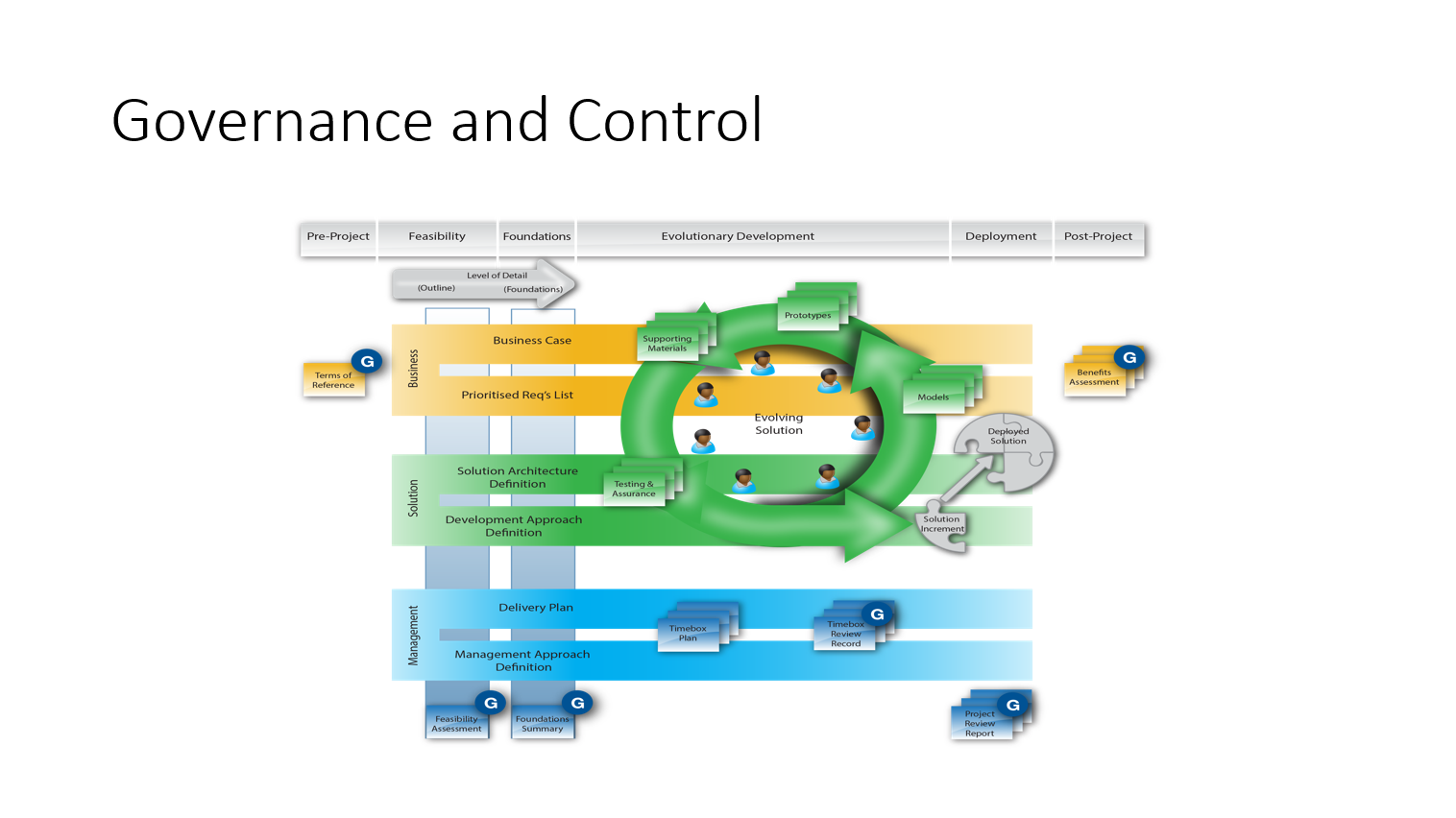
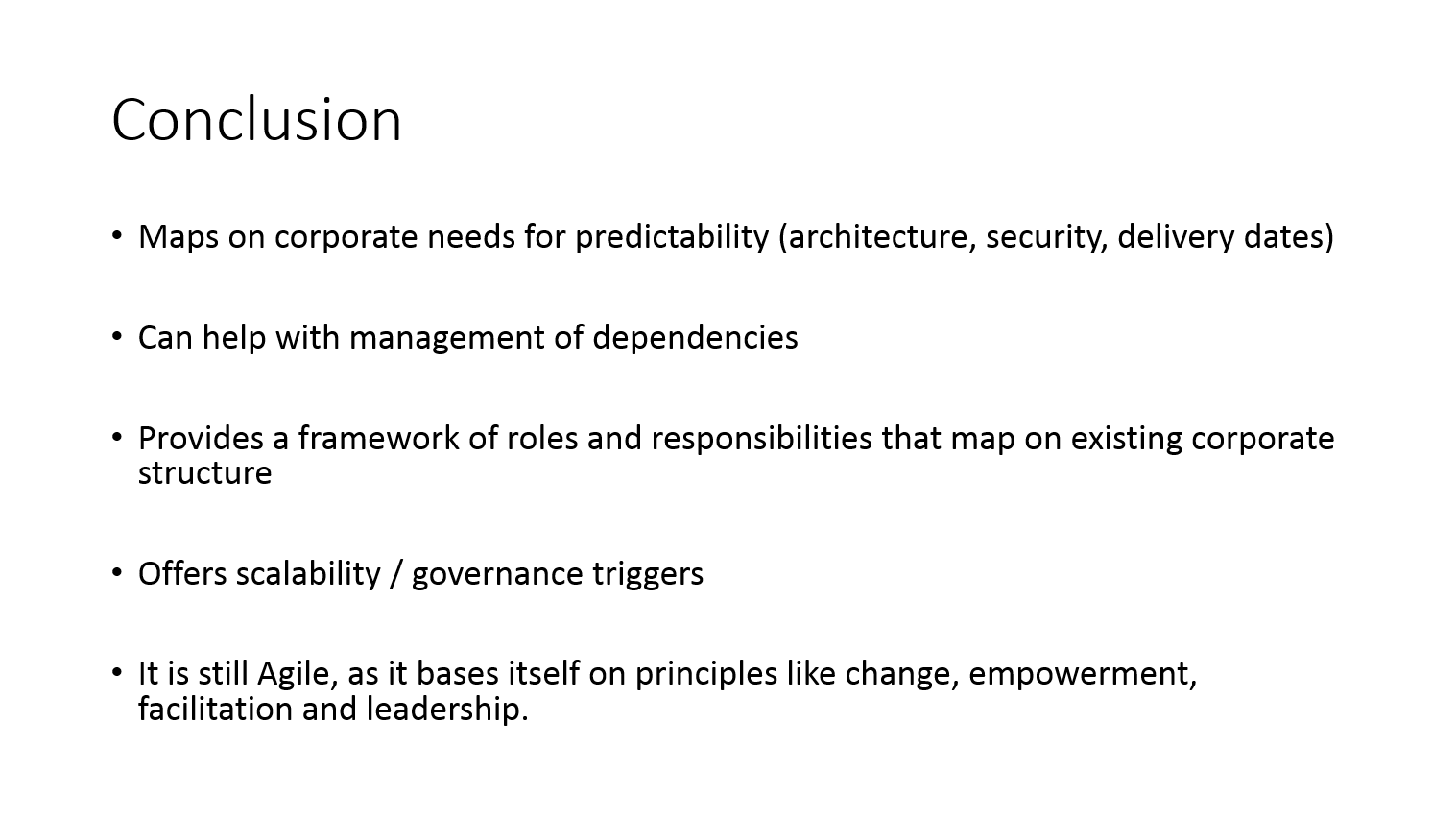
Last year I passed the AgilePM certification (DSDM methodology). The main benefit this methodology brings is, I think, rigor and structure to the Agile world. It bridges the world of software development with the world of large enterprises, bringing in an adjustable layer of governance on top of the team-oriented practices Agile is known for (Lean, Kanban, Scrum, XP). DSDM starts from the premise that everything is adjustable, but in order for things to go smoothly a certain level of up-front planning is needed, a certain level of organization, with more traditional roles and responsibilities, is needed in order for various projects within an corporation to become predictable. It paves the way for better Portfolio Management and synchronization at the project level, not only at team level. 

Here are some slides I put together regarding the methodology. Most of the pictures come from the dsdm.org website, the home of the methodology. Links from the slides are put as caption under each slide.

https://www.dsdm.org/resources/dsdm-handbooks/dsdm-atern-handbook-2008


https://labs.spotify.com/2014/03/27/spotify-engineering-culture-part-1/


https://www.dsdm.org/resources/white-papers/the-dsdm-agile-project-framework-for-scrum


Friday, March 25, 2016

Moving from Autonomous to Collaborative - A Must

Not a new idea, I think I met it first in The 7 Habits of Highly Effective People, yet I recognize it more and more as time passes by.


In the model above, collaboration is depicted as the next step from autonomy. Given the huge amount of studies showing the benefit of autonomous, self-organizing teams, it is easy to get caught into the trap of viewing autonomy as a walled garden - which is precisely the opposite.

I think a collaborative attitude is a responsible attitude. It all starts with autonomy as a prerequisite: you are assigned an area of responsibility, you are accountable for the results (both upsides and downsides, skin in the game) so, in order to succeed, because you are self confident and responsible, you are not afraid to discuss your plans and strategies with others. In the end, the decision lies with you so you do your due diligence  and consider several points of view.

According to this evolutionary model, from dependency to autonomy to collaboration, I don't think one can be truly collaborative as long as one is not granted autonomy and responsibility. I think COLLABORATIVE = AUTONOMOUS + RESPONSIBLE(upsides, downsides) while ACTING RESPONSIBLE means not taking disconnected decisions but rather reaching the right decisions by being connected to the environment and incorporating several points of view. The beauty of this recursive definition is that it shows the reinforcing pattern of collaborative attitude - once this path is taken one can only value it more.

I think the problem is that people view one's ability to act autonomously as the ultimate goal. The fallacy lies in the fact that successes tend to appear sooner while negative consequences tend to appear much later, disconnected from the time of success reporting. For the individual it is dangerous as it makes himself / herself obsolete sooner or later, while for the organization is a disaster waiting to strike.

I believe being autonomous and stopping there is a result of not enough self confidence. As people succeed, they develop work patterns which they apply successfully reinforcing their beliefs while, at the same time, they build walls around themselves to protect their beliefs. It is painful to prove yourself wrong or inaccurate. It is confidence and ego-shattering. Yet this precise attitude leads to restricted learning in adults. It is OK for a while, an example of a local optimum where "good is the enemy of better" and of short-term comfort at the expense of long-term development. 

I don't think it is possible to effectively learn enough to be successful if one is to discover everything by himself / herself. There is simply too much out there. Networking, reaching out, asking what one may consider "dumb questions" is a must. Being vulnerable is a must. Opening up your work is a must.

I think it is great to have strong teams that return results quickly, without ties. It is fast, it is agile, it gets stuff done, but not at the expense of learning and sharing. The should be embedded in the fabric of the organization, in its KPIs, and not trade collaboration effort for short-term achievements. When 80% is not enough, you can only go higher through dialogue - and this is expensive and painful. I think we live in a non-linear world, which only becomes more non-linear as time passes by. That means more investment in risk management on one side and on beating the market on quality and innovation on the other side. Both are learning activities which involve collaboration between various experts, interdepartmental connections, between various companies, in some cases including even the competition. Autonomy understood as island, walled garden, ivory tower is simply a recipe for failing big:


The image above is quite self explanatory - as success is built on top of another success, more trust is gained, more money is involved. The problem with trust is that it grows linearly (or even exponentially) while the single failure is a one-time event that might have disastrous consequences (think turkey before Thanksgiving anecdote - so far so good). In such cases, collaboration and showing openness to dialogue and vulnerability is what strengthens the system, as through low-pain but frequent interactions it helps uncover cracks and assumptions which, otherwise, get undetected and produce major consequences sooner or later. 

In short, being autonomous is not enough.